What are Neural Networks?
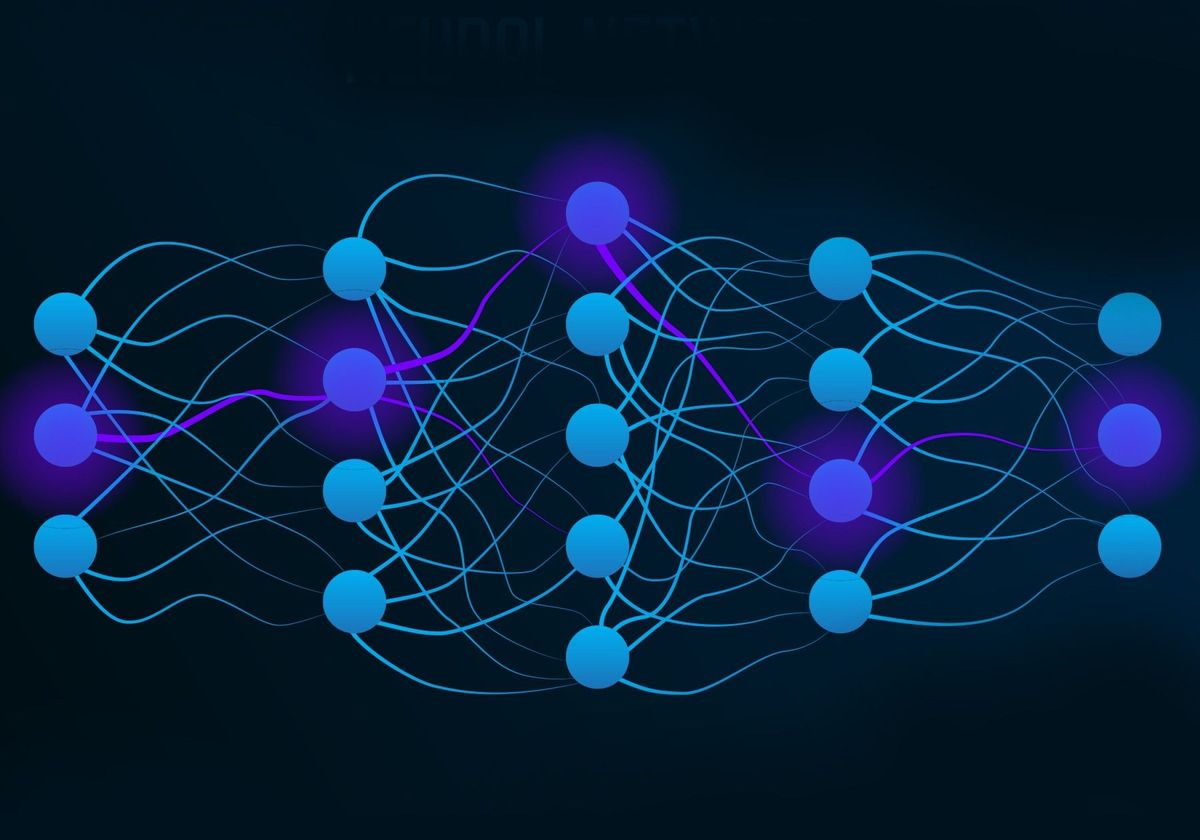
Imagine the human brain, with its billions of interconnected neurons passing signals to each other. Artificial Neural Networks (ANNs) are computational models inspired by this biological structure.
- Neurons (Nodes): These are the fundamental units of a neural network, much like neurons in the brain. They receive input, process it, and then pass on an output.
- Layers: Neurons are organized into layers:
- Input Layer: Receives the raw data (e.g., pixels of an image, words in a sentence).
- Hidden Layers: One or more layers between the input and output where the complex computations and pattern recognition happen. This is where the “learning” truly occurs.
- Output Layer: Produces the final result (e.g., identifying an object, predicting a value).
- Connections (Weights): Each connection between neurons has a “weight” associated with it. During the learning process, these weights are adjusted to strengthen or weaken the influence of one neuron on another.
The Power of Deep Learning
“Deep” learning simply refers to neural networks with many hidden layers – sometimes dozens or even hundreds. The more layers a network has, the deeper it is. This depth allows the network to learn increasingly complex and abstract representations of the input data.
Think of it like this:
- A shallow network might only recognize basic shapes or colors in an image.
- A deep network can build upon these basic features to identify edges, then textures, then parts of objects (like an eye or a wheel), and finally, the complete object itself (a face or a car).
Why is Deep Learning So Effective?
- Feature Learning: Unlike traditional machine learning where humans often have to manually design “features” for the model to learn from, deep learning networks can automatically learn relevant features directly from the raw data. This is a huge advantage, especially with complex data like images, audio, and text.
- Scalability: With more data and more computational power, deep learning models tend to perform better, scaling effectively to massive datasets.
- Versatility: Deep learning powers a vast array of applications, from natural language processing (think ChatGPT) and computer vision (facial recognition) to recommendation systems and autonomous driving.
The Road Ahead
While incredibly powerful, deep learning is an active area of research. Challenges remain in areas like interpretability (understanding why a deep learning model makes a particular decision) and reducing the vast amounts of data and computational resources often required.
As we continue to build and refine these intricate networks, we are truly building the “brain” of tomorrow’s AI, unlocking capabilities that were once confined to the realm of science fiction. Stay tuned as we continue to decode these fascinating advancements!